

If you’ve ever watched a busy dock crew move pallets like it’s nothing, there’s a good chance an electric pallet jack was doing most of the heavy lifting. An electric powered pallet jack takes the strain out of pallet moving and replaces it with powered travel, controlled braking, and smoother handling in tight warehouse spaces.
This guide is written for warehouse operators, supervisors, and buyers who want a practical starting point. We’ll cover how to operate an electric pallet jack, how to use one safely, what to check before every shift, and what to look for when comparing electric pallet jacks for sale.
In This Guide:
What Is an Electric Pallet Jack?
A pallet jack is a low-lift truck designed to pick up and move pallets just off the ground. A manual pallet jack moves by muscle power. An electric pallet jack, sometimes called an electrical pallet jack or electric pallet truck, uses a battery-powered drive motor to move the load, and many models also use powered lift.
In workplace safety terms, powered pallet jacks are typically treated as powered equipment, so operators should understand speed control, braking, turning, and load handling before using one in a live warehouse.
Common Names You’ll See Online
People search for the same tool in different ways. These phrases usually point to the same category:
- Electric pallet jacks, pallet jack electric, pallet jack electrico
- Electric power pallet jack, electric powered pallet jack
- Electric pallet jack for sale, electric pallet jacks for sale
- Electric pallet truck, electric pallet trucks, electric powered pallet truck
Quick Buying Tip
If you only need floor-level pallet movement, an electric pallet jack is often the most practical choice. If you need to lift pallets into racking, consider an electric stacker or forklift instead.
Where Electric Pallet Jacks Shine in Real Warehouses
Most electric pallet jacks are built for fast, repetitive pallet movement in daily warehouse workflows.
- Loading docks and trailers
- Staging and cross-docking
- Pick-and-pack workflows
- Retail backroom restocking
- Manufacturing lines where pallets move constantly
If you also need lift height for staging or racking, not just floor-level movement, you may be looking for an electric stacker rather than a standard pallet jack.
For compact floor-level movement, models like the Raelon F4 3300lbs Lithium-ion Electric Pallet Jack are useful for tight indoor routes, while the Raelon F4-201 4400lbs Lithium-ion Electric Pallet Jack is a stronger fit when heavier daily loads are part of the job.
Before You Start: Training and Why It Matters
A lot of injuries happen because someone treats a powered pallet jack like a manual one. The risk is not only the load. It is also speed, pinch points, turning swing, and the moment when the machine moves faster than expected.
If you’re onboarding a new operator, do not skip hands-on practice in a clear area. Even experienced forklift drivers can feel awkward on day one with a walkie handle, emergency reverse switch, and tight turning behavior.
If your team needs training resources, read our guide on pallet jack certification and training.
Recommended Raelon Electric Pallet Jacks
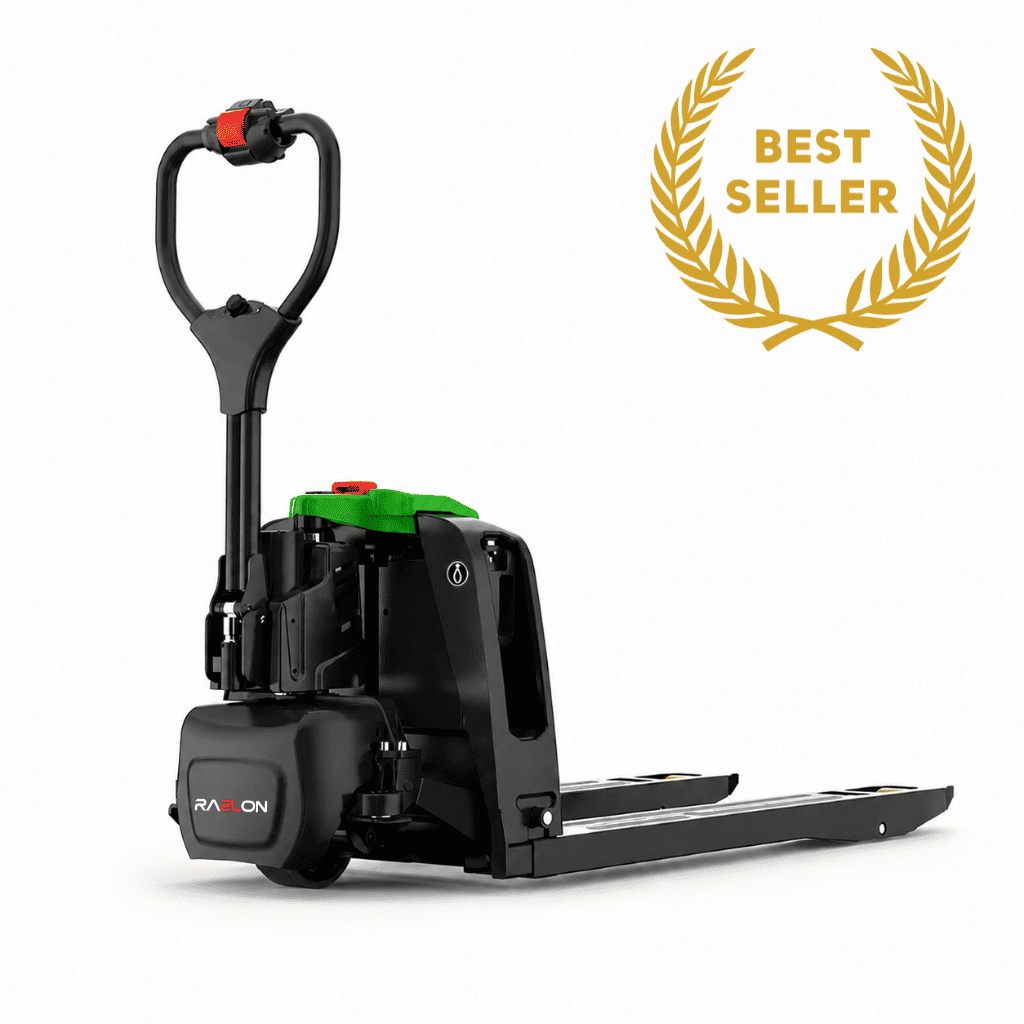
Raelon F4 3300lbs Lithium-ion Electric Pallet Jack
$1,859 CAD / $1,699 USD
$2,190 CAD / $1,999 USD
Compact lithium power for daily warehouse moves, stockrooms, trailers, and tight indoor routes.
View Product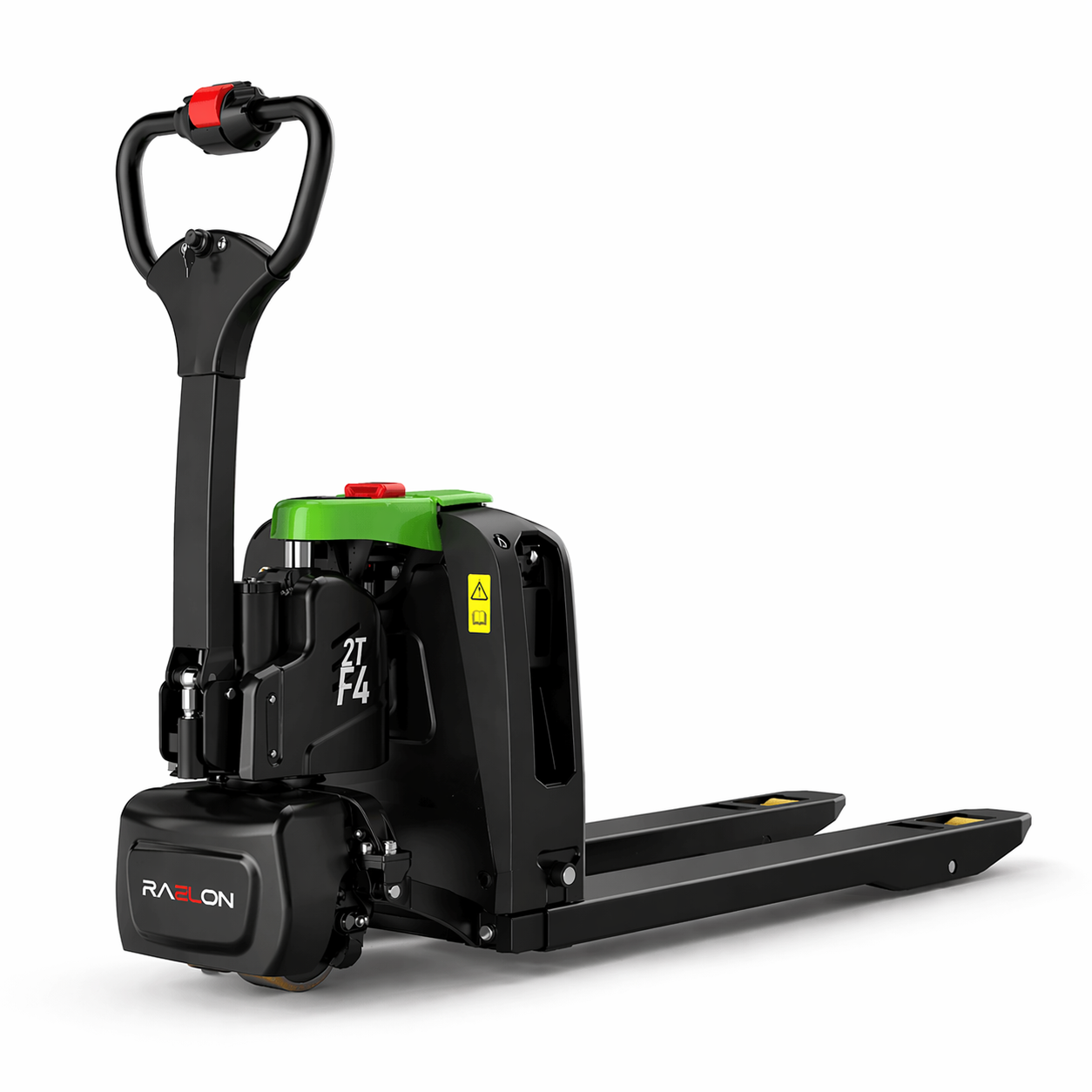
Raelon F4-201 4400lbs Lithium-ion Electric Pallet Jack
$2,895 CAD
$3,217 CAD
A stronger option for heavier pallets, busy dock lanes, and higher daily throughput.
View Product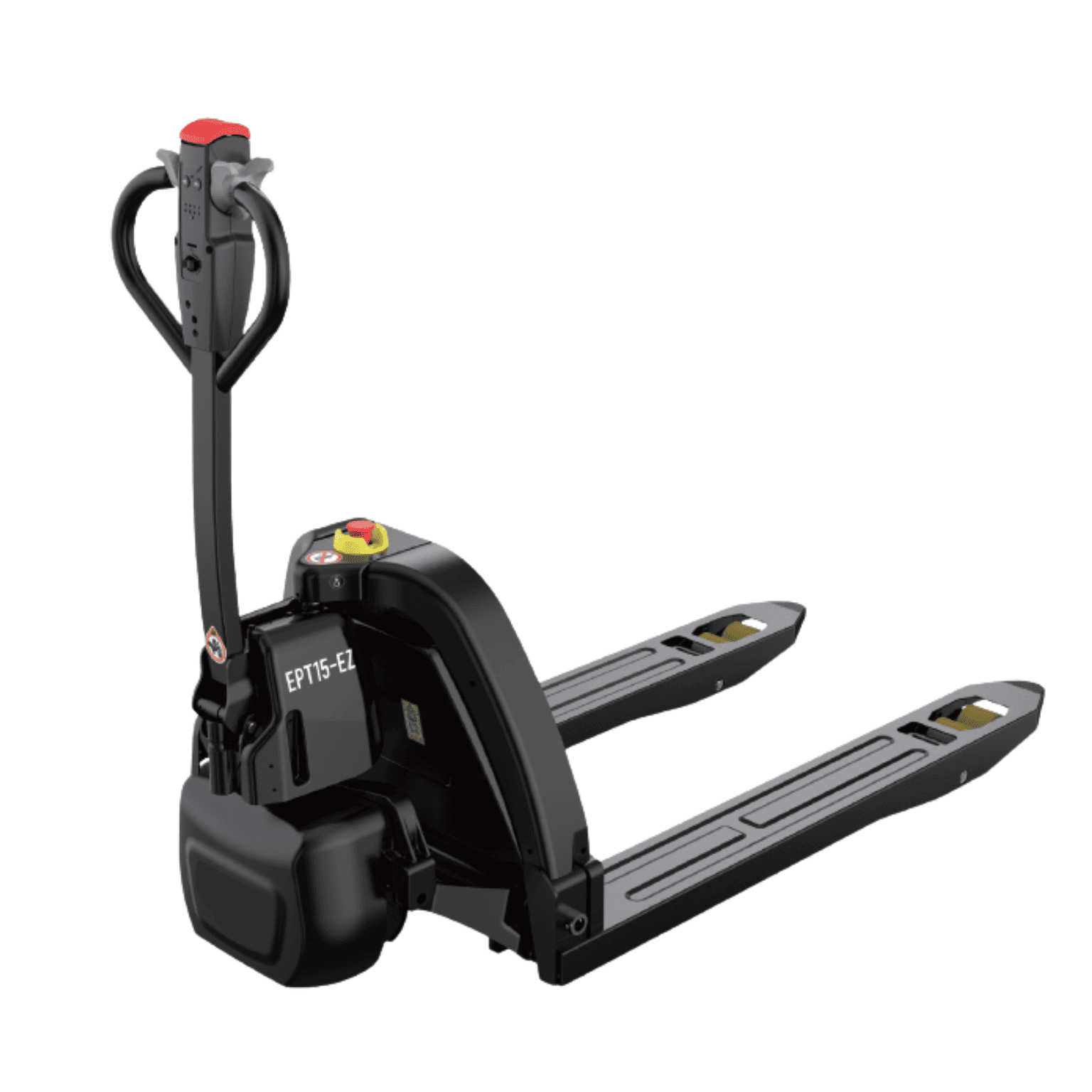
Raelon EPT15-EZ 3300lbs Electric Pallet Jack
$1,699 CAD
$1,999 CAD
A practical entry-level electric pallet jack for everyday indoor material handling.
View ProductPre-Use Checklist: What to Inspect Every Shift
This is where safe operation starts. You want to catch problems before the first pallet of the day. A simple checklist can usually be completed in under two minutes.
Walk-Around Check
- Look for oil or hydraulic leaks under the truck
- Check forks for cracks, bent tips, or obvious damage
- Check load wheels and the drive wheel for chunking, flat spots, or debris
- Confirm the nameplate and safety labels are readable
- Make sure the battery is secured and cables look healthy
If you want a deeper wheel-focused guide, see pallet jack wheels: types and replacement. For replacement items, browse pallet jack parts.
Function Check
- Horn works
- Emergency reverse switch works
- Lift and lower functions move smoothly
- Brakes and control handle return properly
- Forward and reverse travel respond normally
If anything is off, park the unit and report it. Do not keep working “just for one move.”
Controls 101: Get Familiar Before You Move a Pallet
Most walkie-style electric pallet jacks have:
- A control handle with throttle and direction controls
- Lift and lower buttons
- A horn
- An emergency reverse switch
- A key switch or access control
- A battery gauge and sometimes an hour meter
Different models feel different, so your first five minutes should be no-load practice in an open area.
How to Operate an Electric Pallet Jack Step by Step
Below is a practical, repeatable routine. It answers two common questions directly: how to operate an electric pallet jack and how to use an electric pallet jack safely.
Step 1: Start in a Clear Area
Turn the unit on, check the battery indicator, and confirm the handle moves freely. Do a slow forward and reverse test with no load so you understand how it accelerates and stops.
Step 2: Approach the Pallet Straight
Line up square to the pallet openings and go slow. Most fork damage and pallet breakage comes from rushing the approach.
Step 3: Insert Forks Fully
Insert the forks all the way under the pallet. Partial insertion makes the load unstable and increases the chance of pallet damage.
Step 4: Lift Just Enough
Lift only until the pallet clears the floor. Extra height is not helpful and can reduce stability on uneven floors or dock plates.
Step 5: Travel with Visibility and Control
Keep speed low in congested areas, intersections, and near pedestrians. Watch for wet spots, loose objects, holes, and rough surfaces. Follow your site policy on travel direction when a load blocks your view, and use a spotter if required.
Step 6: Turning and Tight Aisles
Electric pallet jacks can turn sharply. Start turns early, go slower than you think you need to, and remember that the power unit can swing wider than expected in tight aisles.
Step 7: Stopping and Parking
Plan your stop, slow down early, lower the pallet fully to the floor, and park where you do not block exits, fire lanes, or dock traffic. Turn the unit off and secure it per your site procedure.
Dock Plates, Ramps, and Slopes: Where Mistakes Happen
Most close calls happen on dock plates or ramps, not on flat concrete. Go slow on transitions, avoid sharp turns on ramps, keep the load low, and increase stopping distance on slick surfaces. Do not ride a walkie unit unless your model is designed for riding and your site allows it.
Battery Charging and Daily Habits That Extend Life
Your electric powered pallet truck is only as reliable as its charging routine. Follow the manufacturer’s charging instructions, keep connectors clean and undamaged, and report chargers that get unusually hot or show visible damage.
If your fleet uses F4 pallet jack batteries and uptime matters, keeping a spare can reduce downtime, such as the Lithium Battery 24V20Ah for F4 Pallet Jack with BMS.
Ergonomics: Why Teams Switch from Manual to Electric
A manual pallet jack looks simple, but repetitive push-pull work adds up. Electric pallet jacks reduce the force required to move loads, especially across longer distances or heavier pallets. They do not remove risk entirely, but reducing fatigue usually reduces mistakes and strain injuries over time.
Safety Tips That Actually Prevent Incidents
- Keep feet clear, especially in tight turns and when backing
- Use the horn at blind corners and intersections
- Never put hands near pinch points between the handle and fixed objects
- Stay alert to pedestrians and do not assume they hear you
- Do not use a powered pallet jack as a personnel lift
- If something feels wrong, stop and reassess
Buying Guide: Choosing an Electric Pallet Jack for Sale
If you’re comparing electric pallet jacks for sale, start with your workflow, then match the model to capacity, turning needs, battery type, and charging reality.
1) Capacity and Real Load Patterns
Look at what you move most often, not the heaviest pallet you move once a month. Many warehouses operate comfortably in the 3,300 to 4,400 lb range for daily pallet movement.
2) Aisle Width and Turning Needs
Tight aisles need compact designs and predictable turning. If racks are dense and the dock is busy, maneuverability can matter as much as capacity.
3) Battery Type and Charging Reality
Ask whether you have the time and space to charge and who owns battery maintenance. Battery choice should match shift length and daily habits, not just the headline spec.
4) Floor Conditions and Load Wheels
Rough concrete, dock plates, and expansion joints punish the wrong wheel material. If your floor is rough, prioritize durability and stability. If you need to refresh wheels or replace common wear items, start with our parts collection.
5) Service, Parts, and Downtime
A cheaper unit that sits waiting for parts is not cheaper. Check warranty terms, parts availability, and whether you can get support quickly.
Common Operator Errors and Quick Fixes
- Error: lifting too high. Fix: lift only until the pallet clears the floor.
- Error: turning fast with a tall or unstable load. Fix: slow down and keep the load low.
- Error: cutting corners on dock plates. Fix: slow down and cross straight.
- Error: skipping inspection. Fix: make it part of the clock-in routine.
- Error: letting untrained staff “just move one pallet.” Fix: powered equipment rules still apply.
Related Guides
- Pallet Jack Certification: Do You Need It and How to Get Trained?
- Pallet Jack Wheels Guide: Types, Sizing, and Replacement
Mini FAQ
Is an electric pallet jack considered a forklift?
It is powered equipment and often treated under the same broader safety category as other powered industrial trucks, but it is not the same as a sit-down forklift. The operating style and risk profile are different.
How fast can electric pallet trucks go?
It depends on the model. Some walkie or rider models are significantly faster than basic walk-behind units.
Do I need a daily checklist?
Yes. A simple pre-use check catches worn wheels, loose parts, control issues, and battery connector problems before they become downtime or injuries.
Final Takeaway
An electric pallet jack is easy to learn, but safe operation still depends on training, daily checks, and choosing the right model for your load weight, floor condition, and warehouse layout.
Ready to compare models? Browse the full Raelon electric pallet jack collection, or contact us for help choosing the right equipment for your operation.


